News and resources from the Region 1 Comprehensive Center
State: New Hampshire

Career and technical education (CTE) programs help prepare students for success with industry-specific training, work-based learning, and academic study. However, students may not consider how local CTE programs might align with the jobs that businesses are hiring for, and the available CTE programs may not align with the needs of the local labor market.
State: New Hampshire

After the pandemic, many students returned to the classroom behind on reading, as shown by data in the National Assessment for Educational Progress (NAEP). Those students are now adolescents and approaching a critical turning point in their education: They are expected to read with greater independence.
State: Massachusetts

R1CC presenters discussed evidence for literacy, including the science of teaching, implementation science, and methodology considerations. By differentiating between evidence, research, and claims about research, participants learned productive ways to analyze and discuss evidence as one piece of a puzzle in decision making. The webinar concluded with a demonstration of a tool to apply ESSA language and ESSA Non-Regulatory Guidance to understand and apply evidence to inform decisions based on local context.
State: Maine, Massachusetts, New Hampshire, Vermont, Regional

Recently, I had the pleasure of gathering with my R1CC colleagues in Waltham, Massachusetts. I enjoyed seeing everyone in-person and making those personal connections. More importantly, I enjoyed having two days of dedicated time to examine and discuss the most pressing topics from state, local, and school leaders in Region 1.
State: Maine, Massachusetts, New Hampshire, Vermont, Regional

State: Maine, Massachusetts, New Hampshire, Vermont, Regional

The Massachusetts Department of Elementary and Secondary Education (DESE) is committed to supporting educators in using evidence-based early literacy practices. The DESE 2019 Literacy Strategic Planidentifies two focus areas of instructional support for English language arts and literacy: high-quality core instruction and the use of evidence-based practices for early literacy skills.
State: Massachusetts

To support its Literacy Strategic Plan, DESE requested that the Region 1 Comprehensive Center (R1CC) conduct a statewide needs assessment on educator preparation in K–3 literacy instruction. The needs assessment consisted of a review of early childhood and elementary certification course syllabi (EPP Core Course Review) to understand which programs are preparing and providing preservice teachers with opportunities to learn about and practice evidence-based reading and writing instruction.
State: Massachusetts
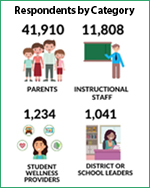
In May 2020, the New Hampshire Department of Education (NH DOE) asked stakeholders to complete a needs assessment survey to better understand statewide experiences with remote learning during spring 2020, and to hear from a broad range of perspectives on returning to school in the fall.
State: New Hampshire
With schools closed across Region 1, states and districts have had questions about ESEA requirements. To support the states we work with, we have pulled together key information and resources from the U.S. Department of Education on the impact of COVID-19 on ESEA requirements. We will continue to provide updates here as new guidance is released. If you have a question or are looking for support, contact us at Region 1 Comprehensive Center.
State: Maine, Massachusetts, New Hampshire, Vermont, Regional