Region 1 CC Blog

News and resources from the Region 1 Comprehensive Center
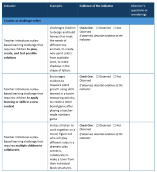
 

Screenshot of the NH play-based learning observation tool.

R1CC develops observation and reflection tool to support play-based learning in kindergarten

The Region 1 Comprehensive Center (R1CC) and the Regional Education Laboratory Northeast and Islands (REL-NEI) worked with the New Hampshire state education leaders to create the Kindergarten Play-Based Learning Observation and Reflection Tool , which helps teachers create opportunities for their students to learn through play.

State: New Hampshire

A hand moves pins over a map attached to a bulletin board.

Mapping Bright Futures: R1CC Helps New Hampshire Match Education with Job Demand

Career and technical education (CTE) programs help prepare students for success with industry-specific training, work-based learning, and academic study. However, students may not consider how local CTE programs might align with the jobs that businesses are hiring for, and the available CTE programs may not align with the needs of the local labor market.

State: New Hampshire

A hand holding a lightbulb against a sunset.

Coaching Framework Helps Maine Classrooms Sustain and Build Upon RREV Innovations

Launching new, pioneering programs to improve student outcomes requires consistent support to help maximize impact. The Region 1 Comprehensive Center (R1CC) and the Maine Department of Education (Maine DOE) wanted to provide evidence-based strategies to support pilot programs launched under the state’s Rethinking Responsive Education Ventures (RREV) grant program, which provides funding to innovative projects that help address inequalities in the state.

State: Maine

Two students reading next to each other.

Webinar | Seeing the Elephant: Understanding Evidence for Literacy

Webinar Details

R1CC presenters discussed evidence for literacy, including the science of teaching, implementation science, and methodology considerations. By differentiating between evidence, research, and claims about research, participants learned productive ways to analyze and discuss evidence as one piece of a puzzle in decision making. The webinar concluded with a demonstration of a tool to apply ESSA language and ESSA Non-Regulatory Guidance to understand and apply evidence to inform decisions based on local context. 

State: Maine, Massachusetts, New Hampshire, Vermont, Regional

A Young girl reads Dr. Seuss's 'Hop on Pop.'

Vermont AOE and R1CC introduce new Vermont Literacy Playbook

Educators and education leaders in Vermont now have a new tool to help them meet their literacy goals. The Region 1 Comprehensive Center (R1CC) worked with the Vermont Agency of Education (AOE) to develop the Vermont Literacy Playbook: An Implementation Guide for System Leaders to Improve Literacy Learning, which was posted to the AOE website in December.

State: Vermont

Ellen Cushing headshot

Letter from the Director: Welcome to Year 5!

Recently, I had the pleasure of gathering with my R1CC colleagues in Waltham, Massachusetts. I enjoyed seeing everyone in-person and making those personal connections. More importantly, I enjoyed having two days of dedicated time to examine and discuss the most pressing topics from state, local, and school leaders in Region 1.

State: Maine, Massachusetts, New Hampshire, Vermont, Regional

A teacher reads a book with a boy.

R1CC supports state education priorities throughout the northeast region with Year 5 projects

States throughout the northeast region are dedicated to improving education and related outcomes for every student. That commitment shows in the priority topics identified for our Year 5 projects, which focus on evidence-based literacy instruction, strengthening the educator workforce, college and career readiness, student mental health, and supporting newcomers.

State: Maine, Massachusetts, New Hampshire, Vermont, Regional

A young boy wearing glasses and surrounded by peers sits at a classroom desk and writes.

Sparking Innovation in Maine’s Classrooms

Maine is primarily rural, featuring uneven population distribution and inequitable access to resources across the state. Educators are hardworking and committed to student success; however, systemic challenges and inequities that were highlighted and exacerbated during the COVID-19 pandemic continue to exist across schools and districts. Commissioner Makin believes that educators on the ground are best situated to design the interventions, supports, and strategies to address those systemic challenges. The critical role of the Maine Department of Education (MDOE) is to provide the resources and support that empower districts to do so.

State: Maine

Three girls coloring together and smiling.

Early Literacy in Vermont: Findings From the Vermont Educator Preparation Program Course Syllabi Review

One of the Vermont Agency of Education's (AOE) primary focuses is increasing student literacy. Therefore, the AOE reached out to R1CC for support related to literacy, specifically, how prepared Vermont certified teachers who attended Vermont educator preparation programs (EPPs) were at using evidence-based literacy instructional practices.

State: Vermont

preschoolers looking at a globe

Mapping the Availability of Universal PreK in Vermont

At a time when the funding of prekindergarten (preK) programs across the country is declining, Vermont lawmakers and state agencies are looking to understand how to improve universal preK programming in the state. R1CC worked with Vermont to develop a Geographic Information System (GIS) map that presents information about preK availability across Vermont—a visual way to dig into some of the questions that can inform strategies to improve availability. The map provides key information related to preK availability and need in Vermont.

State: Vermont